Lava Forms · Reading the surface
Decode the Marks of Moving Rock
Solid lava is a snapshot of liquid behaviour. Folds, rubble, glass and bubbles record temperature, gas content, speed and slope. Once you can read them, a black lava field becomes a detailed story.
Field note · Basaltic flows
Pāhoehoe and ʻaʻā: one lava, two behaviours
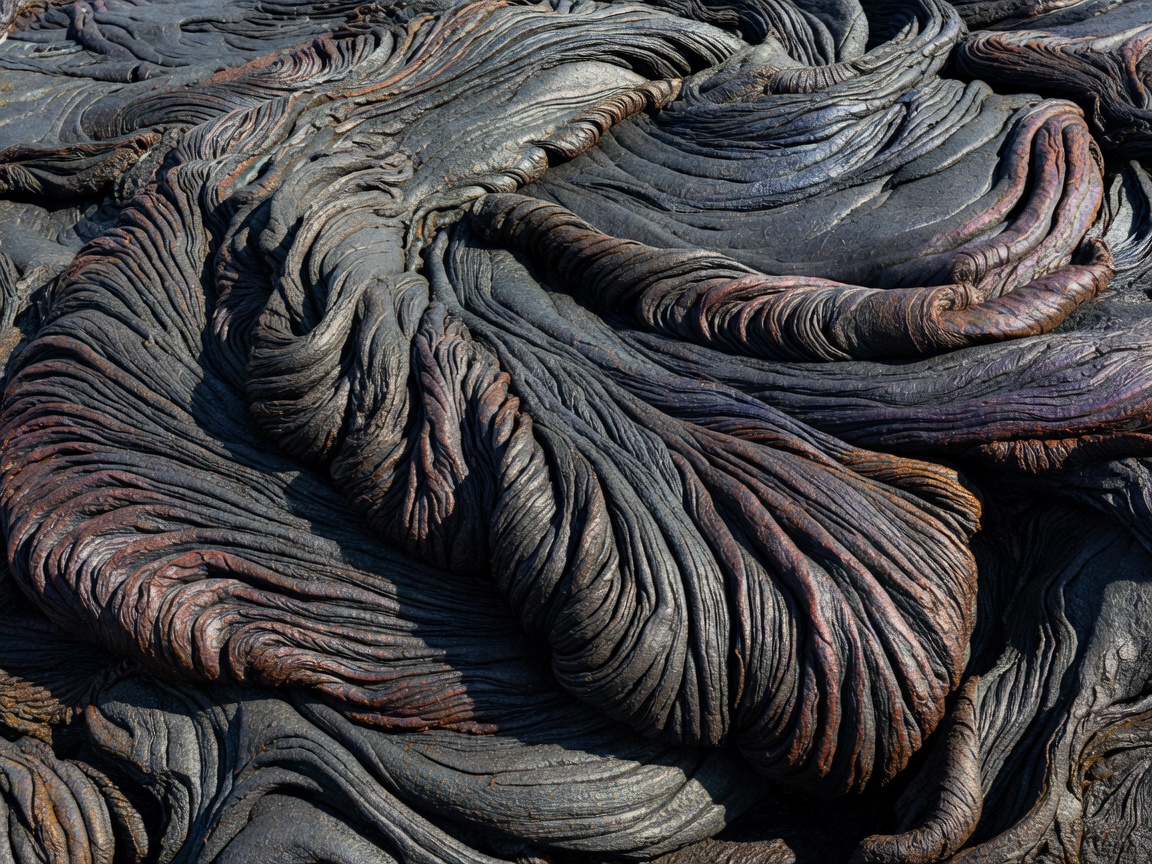
The two Hawaiian words geologists use worldwide describe the same basaltic lava behaving differently. Pāhoehoe forms when hot, fluid lava advances slowly. Its surface chills into a flexible skin that wrinkles into ropes, swells into smooth lobes and breaks out in small toes. The ropes curve downstream, so on a cold flow you can still read which way the lava travelled.
ʻAʻā forms when lava is cooler, more crystal-rich or flowing faster down a steep slope. The crust can no longer stretch, so it tears into jagged fragments called clinker that ride on a dense, moving core. Walking on ʻaʻā is slow, noisy and hard on boots and skin. Many flows begin as pāhoehoe near the vent and switch to ʻaʻā downslope; the reverse almost never happens.
A third type, blocky lava, belongs to more silica-rich magmas such as andesite. Its fragments are larger and smoother-faced than ʻaʻā clinker, and its flows are thick and slow.
Rock-feature annotations
How to tell them apart on foot
- Pāhoehoe
- Smooth or ropy; glassy rind; hollow sound in places.
- ʻAʻā
- Loose, spiny clinker; crunches and shifts; dense core below.
- Blocky
- Angular, smoother-faced blocks; thicker flow fronts.
- Direction
- Rope folds and toes point the way the lava moved.
- HoursA pāhoehoe toe breaks out and skins over.
- DaysLobes inflate as lava pumps in beneath the crust, forming tumuli.
- WeeksChannels roof over and become tubes.
- YearsInteriors cool slowly; crusts may still collapse.
Structures inside and beneath flows
- Lava tubes
When a lava channel crusts over, the roof insulates the flow so it can travel many kilometres. Drained tubes leave caves with lava shelves and drip features. Nāhuku (Thurston Lava Tube) in Hawaiʻi and the caves of Craters of the Moon are well-known examples. Only enter tubes that are designated and, where required, permitted.
- Skylights
Holes where a tube roof has collapsed. On active flows, skylights reveal moving lava; their rims are undercut and unstable.
- Tumuli and pressure ridges
Domes and long cracked ridges pushed up as lava injected under a hardened crust. Their cracks often expose layered interiors.
- Pillow lava
Rounded, bulbous lobes formed when lava erupts underwater or under ice. Found inland, as in parts of Iceland, they record subglacial eruptions.
Columnar jointing
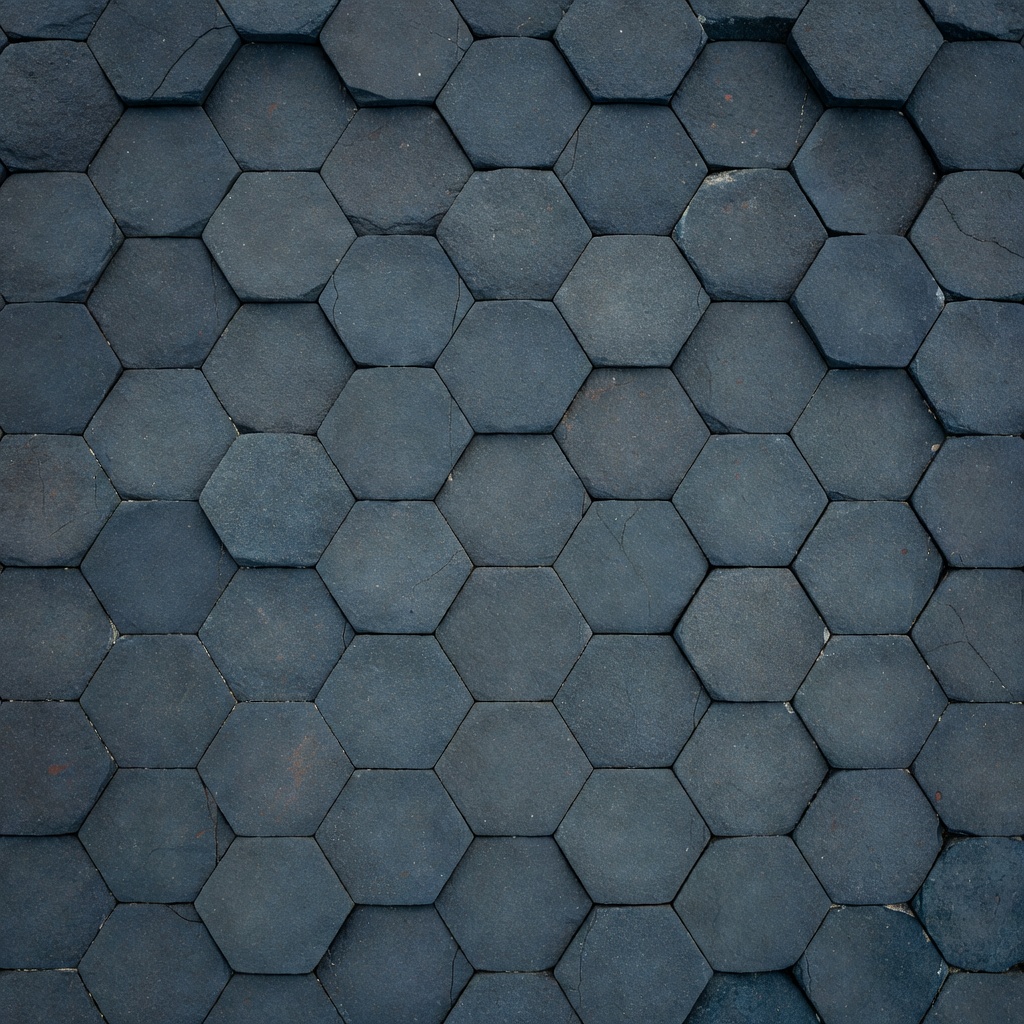
When a thick body of lava cools slowly, it contracts and cracks into polygonal columns perpendicular to the cooling surfaces. Regular columns (the colonnade) usually sit beneath a zone of irregular, fan-like columns (the entablature) that cooled faster, often because water flooded the surface. The Giant's Causeway, Fingal's Cave on Staffa and Svartifoss in Iceland all display them.
Glass, foam and fragments
- Obsidian
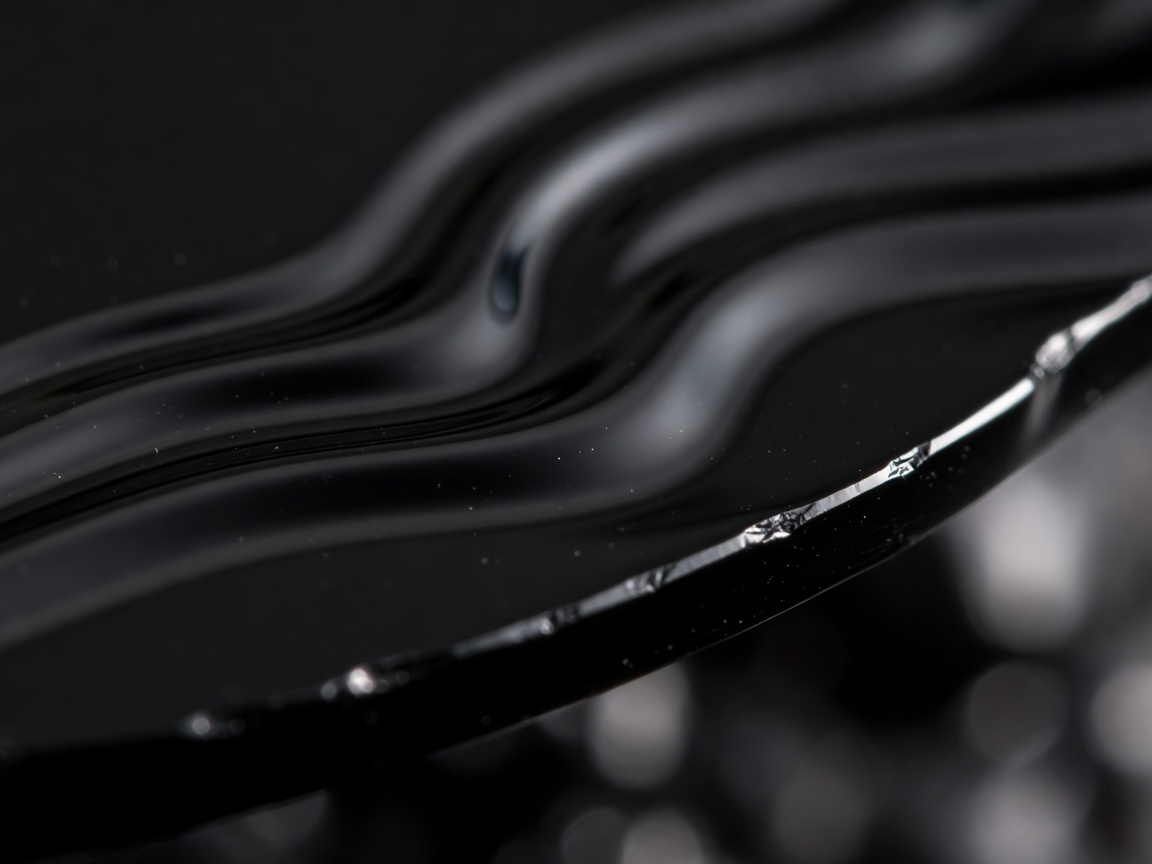
Silica-rich lava that cooled too fast for crystals to grow. Its curved, shell-like fractures made it prized for tools for thousands of years. Obsidian Cliff in Yellowstone and Hrafntinnusker in Iceland are notable sites, both protected.
- Pumice
Gas-rich, explosive magma frozen as glassy foam. Light enough to float; whole rafts have drifted across oceans after submarine eruptions.
- Scoria and cinders
Darker, denser basaltic fragments that build cinder cones. Loose and tiring to climb.
- Vesicles
Bubble holes frozen in lava. Their size and stretching show how much gas the lava held and how it flowed.
- Pele's hair and tears
Fine strands and droplets of volcanic glass spun by wind from fountaining lava. The strands can irritate skin and eyes.
Safety notice · Lava environments
Interpretation is not an invitation
- Ocean entries
Where lava meets the sea, newly built land (lava deltas) can collapse without warning, and the steam plume (laze) carries hydrochloric acid and glass particles.
- Crust over heat
A dark, solid-looking surface may sit above lava or hot voids. Interiors of thick flows stay hot for years.
- Sharp ground
Falls on ʻaʻā and glassy crust cause deep cuts. Long trousers, gloves and sturdy boots reduce injuries.
- Leave the rock
Removing rock is prohibited in national parks and many protected areas, and carries cultural weight in Hawaiʻi.
Current flow activity and closures are published by the relevant observatory. Our visitor checks explain how to confirm them.